Lotiskorea Newsletter 2026.08
|
|
|
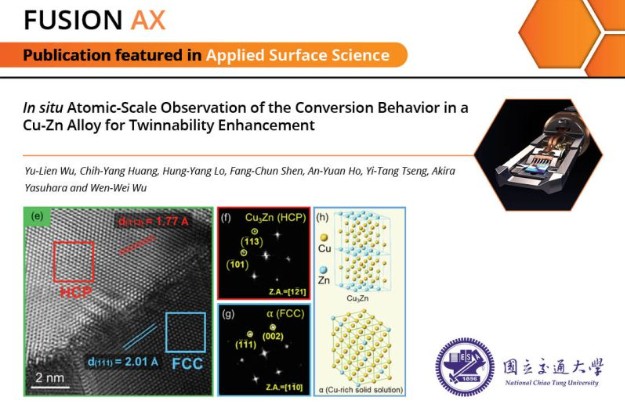
In this newest publication, researchers used the #FusionAX system to directly observe the atomic-scale phase transformations and diffusion mechanisms in Cu-Zn alloys during heating using high resolution in situ TEM.
Cu-Zn alloys are widely used in electrical and structural applications due to their excellent conductivity and mechanical strength. Understanding how their microstructure evolves under thermal conditions is essential for improving their long-term performance and stability.
Key findings:
🔥 Direct observation of the transformation from Zn/Cu thin films to β-CuZn at 180 °C.
⚛️ Identification of the epitaxial relationship between β-CuZn and the Cu substrate during phase formation.
🔬 Formation of the Cu-rich α phase at 300 °C through layer-by-layer atomic diffusion, reducing the system's Gibbs free energy.
📊 Atomic-resolution imaging provides new insight into the kinetics and mechanisms governing phase evolution in Cu-Zn alloys.
This work highlights how #FusionAX enables researchers to visualize atomic-scale structural transformations in real time and at high temperature, providing valuable insights on thermal stability and mechanical performance.
Want to read the entire work?
https://hubs.li/Q04ntzYr0
Want to know more about the Fusion AX system?
https://hubs.li/Q04ntjg60 |
|
|
n this newest publication, researchers used the #FusionAX system to directly observe the structural evolution of ZIF-8-derived porous carbon during pyrolysis using in situ heating TEM.
Zn-based metal-organic frameworks (MOFs) are attractive precursors for producing porous carbon materials with high surface area, making them promising candidates for energy storage applications. However, the mechanisms behind Zn volatilization and pore formation have remained poorly understood.
Key findings:
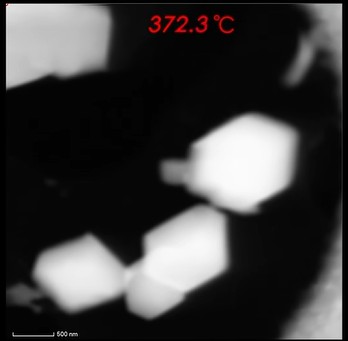
🔥 Real-time observation of the temperature-dependent evolution of ZIF-8 during pyrolysis.
⚛️ Direct visualization of Zn volatilization and the accompanying development of a highly porous carbon framework using both EDS and in situ TEM
🔬 Discovery that trace amounts of Zn remain in the carbon structure even above zinc's boiling point (907 °C), persisting up to 1100 °C.
This work highlights how #FusionAX enables researchers to capture dynamic structural transformations during high-temperature processing, providing valuable insights into the formation of advanced porous carbon materials for next-generation energy storage applications.
Want to read the entire work? Find it here!
https://hubs.li/Q04nv6BM0
Want to know about the Fusion AX System for #materialscience research?
https://hubs.li/Q04ntMjP0 |
|
|
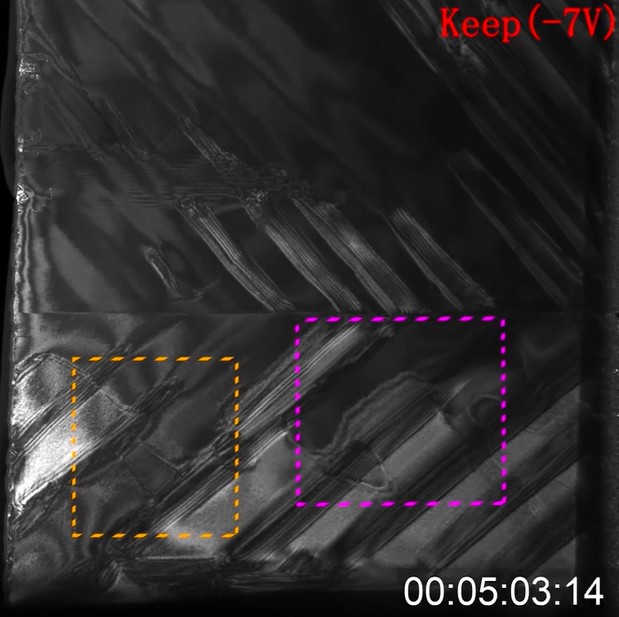
In this publication, the #FusionAX system enabled in situ TEM the investigation of ferroelectric domain switching dynamics in a relaxor ferroelectric PMN-PT single crystal under applied electric fields. By combining electrical biasing inside the TEM with quantitative domain analysis, the authors directly correlated nanoscale polarization reversal processes with macroscopic ferroelectric behavior.
Key highlights:
⚡ Fusion AX enabled in situ TEM observation of ferroelectric domain nucleation, growth, and evolution during electrical cycling
📊 Quantitative analysis of domain-area evolution allowed extraction of microscopic polarization reversal velocities and their relationship to macroscopic P–E hysteresis behavior
🔍 The study provides direct visualization of domain switching mechanisms when electric fields are applied non-parallel to the polarization direction, offering new insights into relaxor ferroelectric behavior
This work delivers a comprehensive nanoscale understanding of ferroelectric polarization reversal in PMN-PT single crystals. By linking real-time domain evolution to bulk electrical responses, the study advances our understanding of domain switching kinetics and provides valuable guidance for the development of next-generation piezoelectric and ferroelectric devices.
Want to read the entire work? Find it here!
https://hubs.li/Q04mh6m10
Want to know more about our Fusion AX system?
https://hubs.li/Q04mh50T0 |
|
|
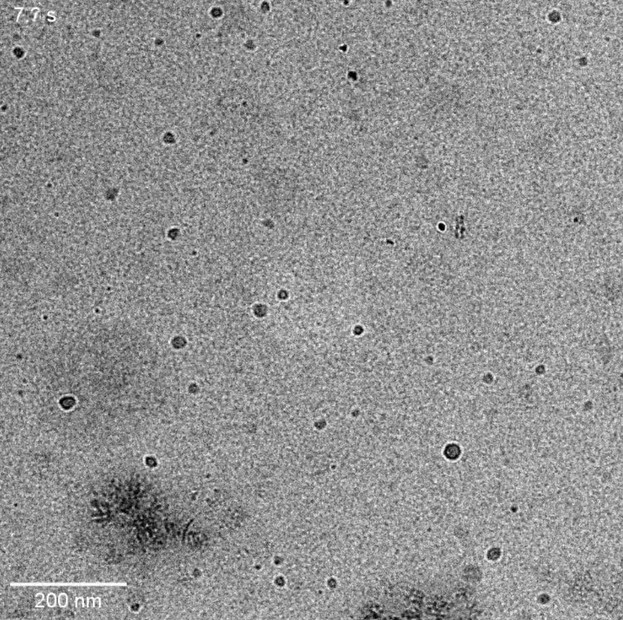
Have you ever wondered how radiolysis affects highly sensitive materials in different liquids? In this publication, the #PoseidonAX system enabled a systematic investigation of electron beam damage in the metal-organic framework (MOF) ZIF-8 during liquid cell transmission electron microscopy (#LCTEM). By combining in situ imaging, electron diffraction, and postmortem 4D-STEM analysis, the authors reveal how imaging conditions influence both the morphology and crystallinity of this highly beam-sensitive material.
Key highlights:
💧 Poseidon AX enabled in situ LCTEM studies of ZIF-8 in different liquid environments, revealing significantly greater morphological stability in dimethylformamide (DMF) compared to water
⚡ The study establishes that ZIF-8 crystallinity is primarily governed by accumulated electron fluence, with loss of crystallinity occurring at a critical dose of approximately 80 e⁻ Å⁻² regardless of solvent environment
🗺️ Postmortem 4D-STEM analysis revealed electron beam damage extending beyond the directly imaged region and demonstrated that radiolytic effects are more pronounced during TEM imaging than STEM imaging
This work provides important insights into the mechanisms of electron beam-induced damage in metal-organic frameworks during liquid-phase electron microscopy. The findings establish practical guidelines for evaluating radiolysis effects and optimizing imaging conditions, helping researchers obtain more reliable nanoscale observations of beam-sensitive materials in liquid environments.
Want to read the entire work? Find it here!
https://hubs.li/Q04mjnbZ0
Want to know more about our Poseidon AX system?
https://hubs.li/Q04mhTyh0 |
|
|
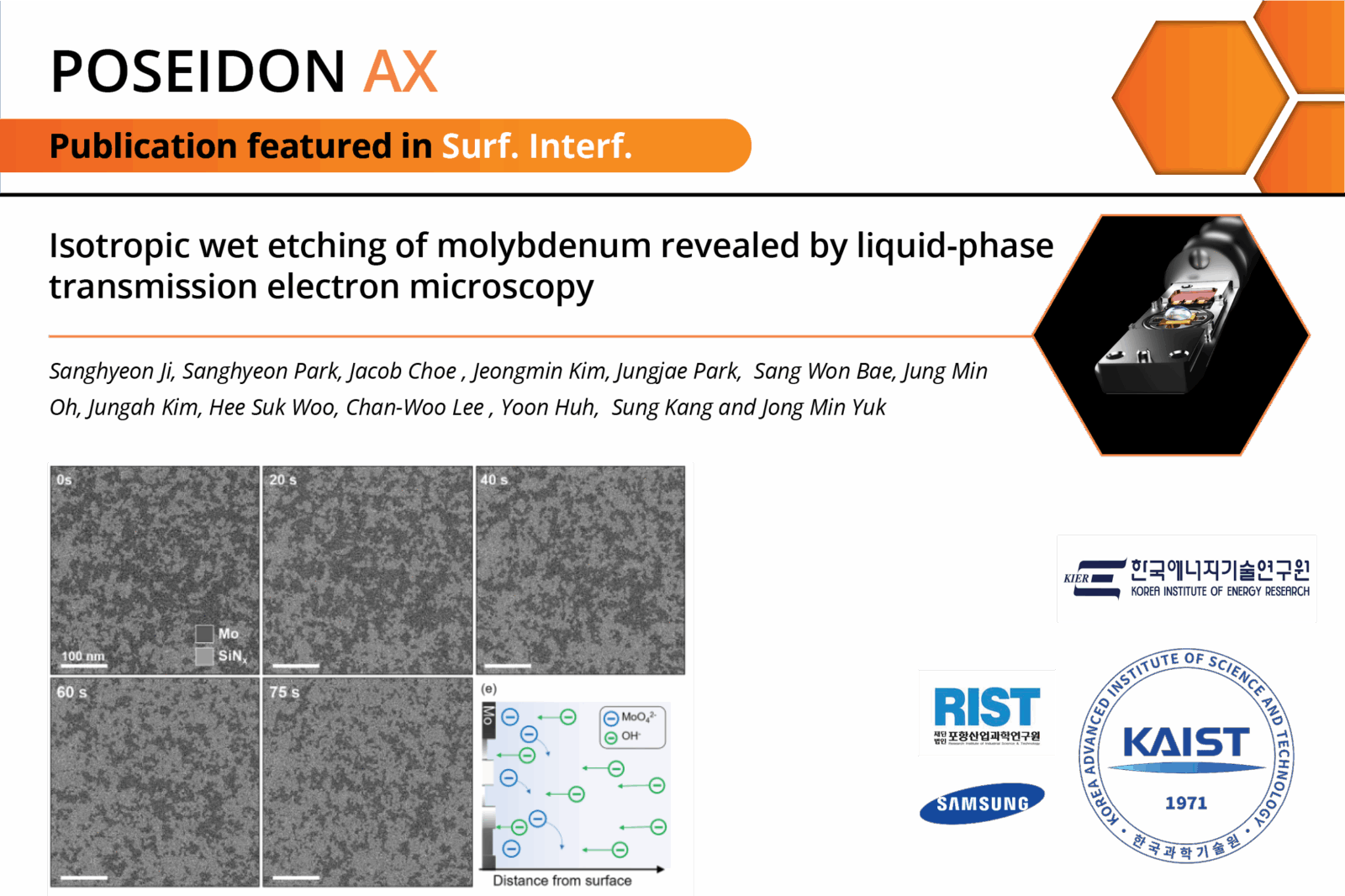
Isotropic wet etching of molybdenum revealed by liquid-phase transmission electron microscopy
In this newest publication from KAIST, authors have looked at the synthesis of Mo interconnects at a sub-10 nm scale using the Poseidon AX system!
As devices shrink to the sub-10 nm scale, creating reliable interconnects becomes increasingly difficult. Using a wet-etching process, the authors were able to achieve a smooth surface instead of a more conventional, but problematic, rough Mo surface!
By using the Poseidon AX system, the authors gained insight in the following:
Direct visualization of how etchant choice influences reaction product buildup
Confirmation of diffusion-limited etching dynamics in real time
Experimental proof that isotropic wet etching yields atomically smoother Mo surfaces
Using this specific synthesis method allowed to create a high-quality material, that can potentially be used in next-generation electronic device fabrication!
Want to read the entire work? Find it here!
https://linkinghub.elsevier.com/retrieve/pii/S2468023025018450 |
|
|
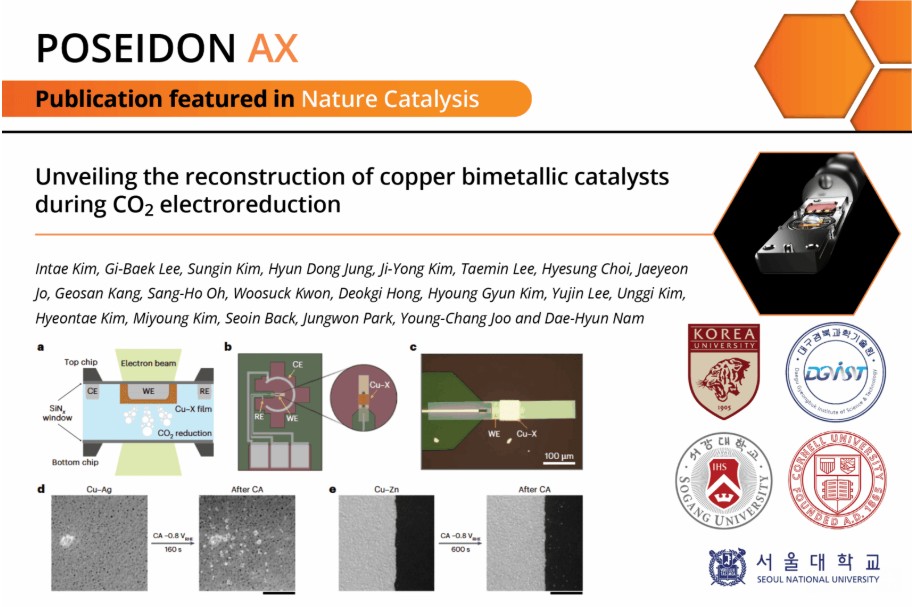
Unveiling the reconstruction of copper bimetallic catalysts during CO2 electroreduction
In this newest publication focusing on electrocatalysis in the microscope, researchers looked at copper bimetallic catalysts during CO2 electroreduction! Using in situ liquid-phase TEM with Poseidon AX, researchers Sungin Kim and Jungwon Park uncovered a general principle behind how Cu-based bimetallic catalysts evolve during the electrochemical CO₂ reduction reaction (CO₂RR).
What did they see?
Reconstruction occurs through selective dissolution and redeposition
The degree of restructuring depends on the miscibility of Cu with a secondary metal (Ag, Fe, Zn, or Pd)
These changes directly influence product selectivity, shifting the balance between C1 and C2 products like ethylene and ethanol
This research shows that catalyst design is not just about the starting material, it is about predicting and controlling how the catalyst will evolve in real electrochemical environments. Using liquid phase microscopy including electrochemistry, it is now possible to observe these reconstructions in action.
Want to read the entire work? Find it here!
https://www.nature.com/articles/s41929-025-01368-9
|
|
|
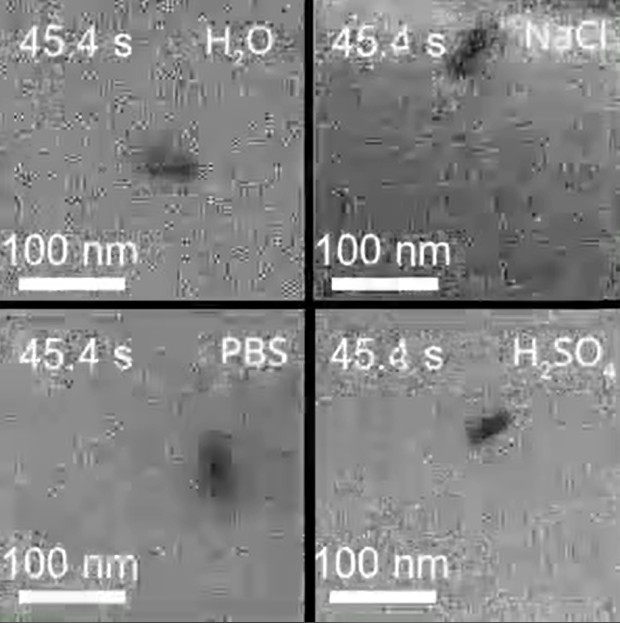
In this newest publication, Isabel Panicker, Zain Shabeeb, Cory hargus, and Vida Jamali from #GeorgiaTech used the #PoseidonAX system to investigate how the ionic environment influences the motion of PEG-coated gold nanorods (AuNRs) near liquid–solid interfaces using liquid-phase TEM (#LPTEM).
By systematically varying the surrounding electrolyte (H₂O, H₂SO₄, NaCl, and PBS), the authors reveal how electrostatic screening and ion-specific interactions govern nanoparticle transport at the nanoscale. Combining in situ LPTEM with statistical analysis and deep learning, they identify distinct diffusion mechanisms that emerge under different interfacial conditions.
Key findings:
🔬 Electrostatic screening and specific ion effects directly tune nanoparticle mobility near the SiNx membrane.
🧠 Deep learning analysis distinguishes between fractional Brownian motion (FBM) and annealed transient time motion (ATTM), depending on the ionic environment.
⚡ Strongly interacting systems (H₂O and H₂SO₄) exhibit FBM, while screened environments (NaCl and PBS) transition to ATTM.
📊 A passive nanorheology framework reconstructs the local viscoelastic properties of the liquid–solid interface from nanoparticle trajectories.
💡 Translational and rotational motion serve as nanoscale probes to quantify interfacial mechanics and transport behavior.
This work demonstrates how #PoseidonAX enables nanoparticle dynamics studies in liquid environments, providing new insights into interfacial transport processes that are relevant to catalysis, soft matter, and biological systems.
Want to read the entire work? Find it here!
https://hubs.li/Q04ntv0K0
Want to know more about our Poseidon AX system for nanoparticle dynamic studies?
https://hubs.li/Q04ntmqw0 |
|
|
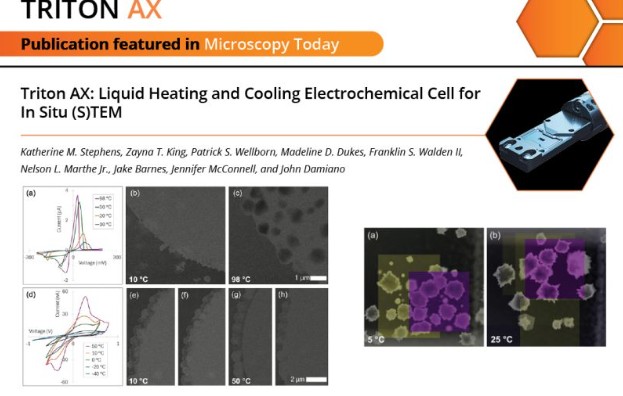
This article introduces #TritonAX, the only liquid cell TEM (LCTEM) workflow solution capable of both liquid heating and cooling during nanoscale electrochemical analysis. Written by our own Kate Stephens and Zayna King, this article is a must-read if you want to understand more about this new system! By enabling precise temperature control across an unprecedented –50 °C to 300 °C range, Triton AX establishes a new benchmark for studying temperature-dependent liquid-phase processes directly in the TEM.
The publication demonstrates how combining electrochemistry with active thermal regulation allows researchers to replicate real operating environments and observe how materials structurally and functionally evolve under realistic conditions.
Key highlights:
❄️ Widest temperature range available in LCTEM, enabling both liquid cooling and heating in a single workflow
🌡️ Benchmark ice crystallization experiments validating robust and reliable liquid cooling performance
⚡ Electroplating studies demonstrating temperature-dependent electrochemical measurements in liquid
🔬 Beam-induced growth experiments confirming suitability for probing temperature-driven liquid-phase dynamics
Together, these results position Triton AX as an advanced and versatile platform for investigating energy materials, electrochemical systems, and nanomaterials under operationally relevant conditions.
Want to read the entire work?
Find it here!
https://hubs.li/Q04hCFg00 |
|
|
📖 In this newest work published by #CornellUniversity in collaboration with #Protochips, Sungin Kim under the supervision of Prof. Yao Yang has published the first paper using the #TritonAX system!
By combining electrochemical control, heating, and cooling in liquid environments, researchers show a completely new way to explore nanoscale processes across a wide temperature range (−50 °C to 300 °C).
With Triton AX, the team was able to:
⚡ Perform quantitative electrochemistry under realistic, extreme conditions
🔥❄️Directly visualize Cu electrodeposition and stripping from cold to hot environments
🔬Apply machine learning–assisted 4D-STEM analysis to reveal how nanoscale copper islands evolve into dendrites
Understanding electrochemistry in action — at the atomic scale and under operando conditions — is critical for advancing renewable energy materials like catalysts and batteries that must perform in diverse climates.
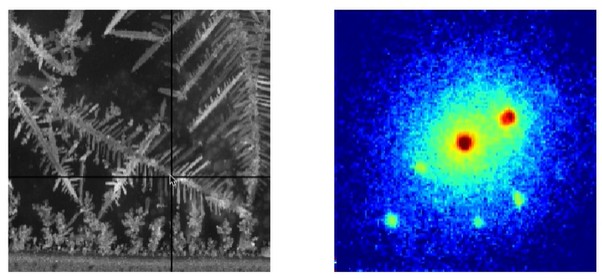
In the video we can see the results of operando 4D-STEM diffraction imaging in liquids at −40 °C on the Cu dendrites that were formed.
Want to read the entire work? Find it here!
https://hubs.li/Q04hCLZW0 |
|
|
How much light reaches your sample during an in situ photoillumination experiment?
Accurately understanding the power density at the sample is critical for creating relevant experimental conditions and ensuring reproducible results. But how do you account for power losses through connectors, optical fibers, and MEMS device windows before the light reaches the sample?
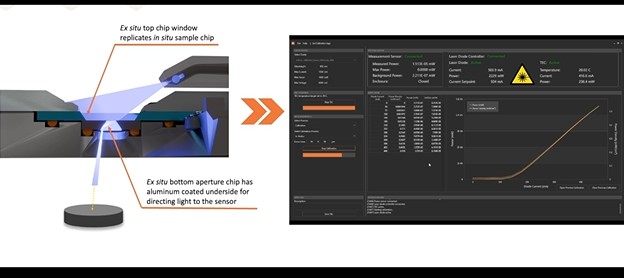
Sol for Atmosphere AX is the only commercially available system that includes a dedicated ex situ characterization station for measuring power density at the end of the optical path.
Using automated calibration workflows, the software will measure the illumination through the connectors, fiber, and silicon nitride window to generate a calibration file that provides an accurate measurement of the power density on the sample.
But the workflow doesn't stop there!
With the AXON software platform, power density data is automatically synchronized with every image and indexed for easy filtering and analysis. Integrated machine vision and live physical drift correction compensate for sample movement caused by photothermal effects, allowing you to leave your TEM session with a fully labeled, drift-corrected dataset.
Learn more about Sol for Atmosphere AX here: https://hubs.li/Q04m3TVp0 |
|
|
상담 문의
Email : hskim@lotiskorea.com
Tel : 010-2858-2798 |
|
|
|