Lotiskorea Newsletter 2026.05
|
|
|
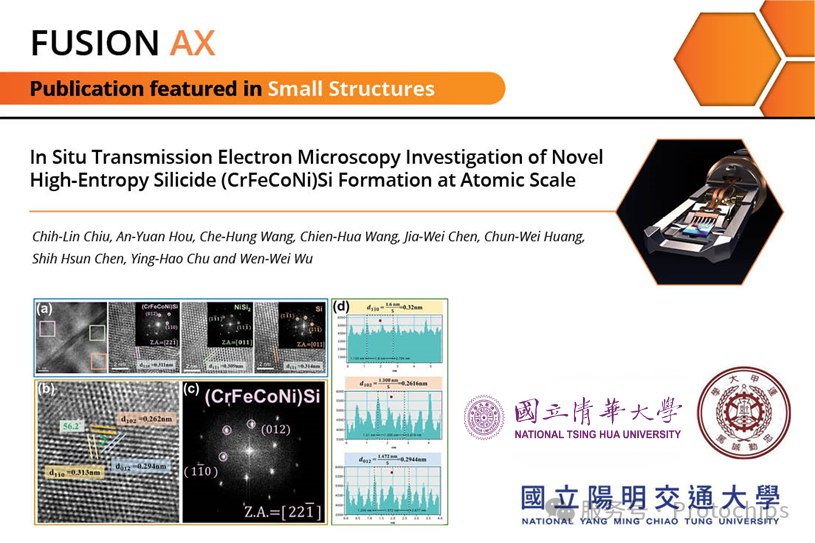
In Situ Transmission Electron Microscopy Investigation of Novel High-Entropy Silicide (CrFeCoNi)Si Formation at Atomic Scale
Tuesday publication post! High-entropy silicides (HESs) are emerging as next-generation materials for microelectronics and mechanical applications. In this study, the #FusionAX system was used to reveal the silicidation dynamics of a novel HES, (CrFeCoNi)Si, synthesized via solid-state reaction.
What was observed?
Real-time diffusion tracking: Ni initiates silicidation at 400 °C, forming Ni₂Si.
Phase evolution: Binary silicides (FeSi₂, Co₂Si) emerge at 500 °C, followed by ternary silicides (FeNiSi, CoNiSi) at 600 °C.
Final transformation: CrSi₂ reacts at 700 °C to form the orthorhombic HES phase.
By performing in situ microscopy, it was possible to observe the diffusion-driven transformation pathways of high-entropy silicides, offering a new strategy for designing advanced functional materials.
|
|
|
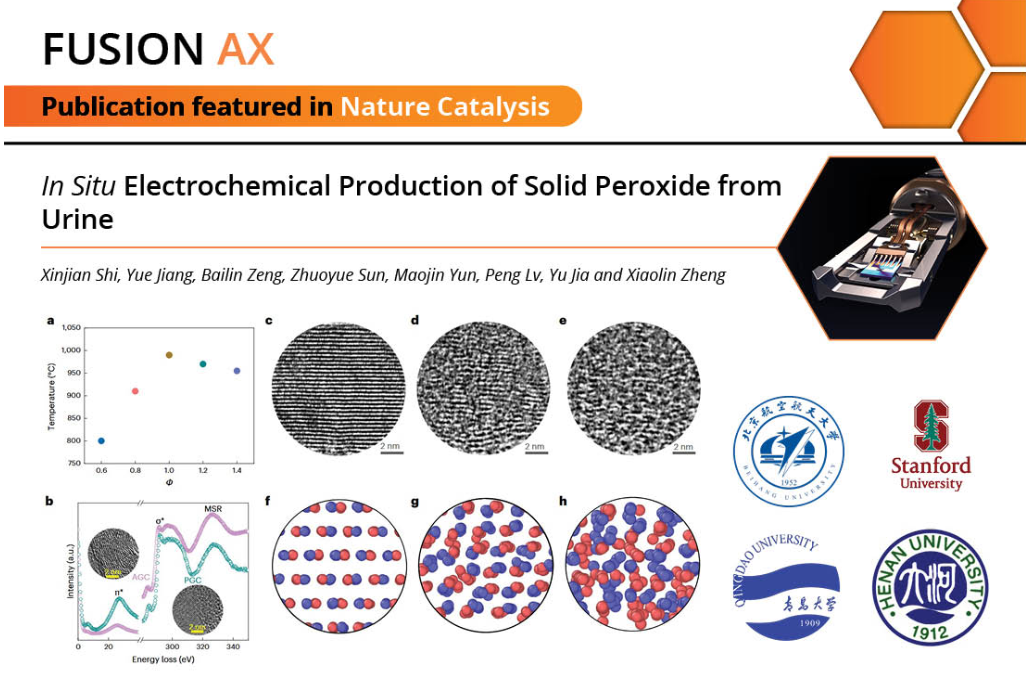
In Situ Electrochemical Production of Solid Peroxide from Urine
Selective urea extraction from urine is crucial for urban wastewater treatment, but traditional methods lack efficiency and scalability. Using the Fusion AX for in situ heating experiments, authors captured the real-time conversion of urea into percarbamide, a valuable crystalline peroxide derivative.
What was seen using the Fusion AX system?
Tracked real-time transitions from an ordered crystalline state to a semiparacrystalline and finally a disordered state
Integrated molecular dynamics (MD) modeling to map nucleation and growth stages
By watching the transformation unfold, the authors were able to understand details of the nucleation and growth processes for orbital hybridization manipulation processes! This gives fundamental ideas about how localized graphic bonding changes.
Want to read the entire paper?
|
|
|
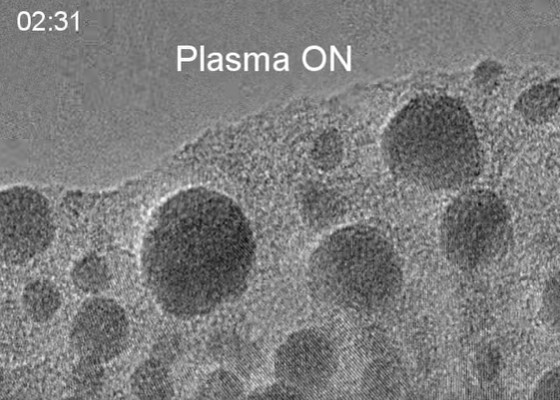
In this newest publication, the #FusionAX system was used to investigate nanomaterial synthesis and phase evolution during plasma-assisted selenization for transition metal dichalcogenides (TMDs). Instead of relying on high-temperature, long-duration annealing, the authors demonstrated a plasma-assisted chemical vapor reaction with selenium that enables spinodal decomposition and self-assembly at lower temperatures and shorter processing times.
Key highlights:
🔬 Direct observation of partial-to-complete selenization and surface heterostructure formation
🔥 Spinodal decomposition coupled with self-assembly during plasma-assisted synthesis
🧩 Unique phase engineering revealed by TEM and EDS analysis
This work showcases how in situ heating electron microscopy provides critical insight into dynamic phase transformations, providing a efficient route to synthesize materials with tailored properties! |
|
|
In this newest study, the #FusionAX system was used to investigate phase-change behavior in a liquid metal colloidal system. By examining dissolution and recrystallisation in a Ga–Cu system, the group at RMIT University with Edwin Mayes reveal how solute transport and crystallisation occur inside liquid metals, an area that remains underexplored despite its relevance to catalysis, phase change materials, and additive manufacturing.
Key highlights:
🔥 Direct observation of Ga2Cu crystals dissolving layer-by-layer into liquid gallium during heating
💠 Complete dissolution followed by rapid recrystallisation under supercooled liquid metal conditions
🔬 In-situ TEM enabled nanoscale tracking of crystallisation and dissolution dynamics in real time
📈 A simplified diffusion model, supported by computational analysis, provides insight into solute flux and mass transport in liquid metals
This work highlights how nanoscale in-situ microscopy can uncover fundamental processes governing liquid metal systems. This knowledge is crucial for applications in catalysis, synthesis, phase change materials, and energy storage.
|
|
|
In this newest study, a lamella memristive device fabricated via focused ion beam (FIB) from a metal/TiOx/TiN/Si structure is explored to uncover nanoscale switching mechanisms in resistive switching (RS) systems. Using advanced in situ microscopy and electrical characterization with the #FusionAX system, the authors reveal how ultra-low-voltage switching can be achieved with high repeatability.
Key highlights:
⚡ The device exhibits volatile resistive switching with an ultra-low threshold of ≈ ±0.4 V, enabling low-power operation
🔬 In situ TEM and STEM-EELS directly visualize oxygen vacancy migration under applied bias, linking ionic motion to electrical behavior
🔄 Switching is governed by modulation of Schottky barriers at metal/semiconductor interfaces, driven by vacancy redistribution
This work provides fundamental insight into interface-driven RS mechanisms and highlights how nanoscale characterization can guide the design of next-generation ultra-low-energy memristive devices for data storage and neuromorphic computing.
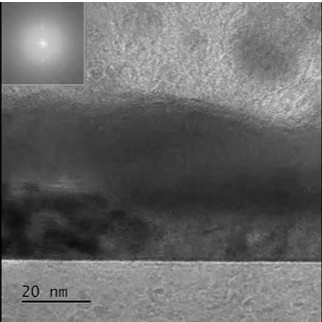
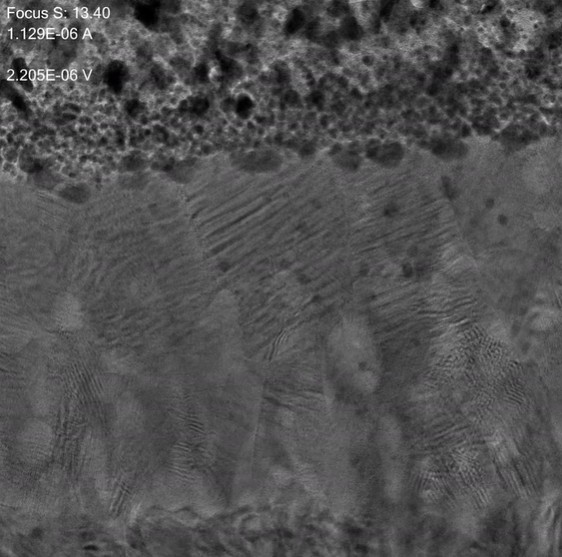
In the video you can see how #AXONSynchronicity is keeping up with the focus by plotting the focus score! Using our focus assist options, the software is able to automatically keep the sample in the right focus, without the operator having to touch the microscope! |
|
|
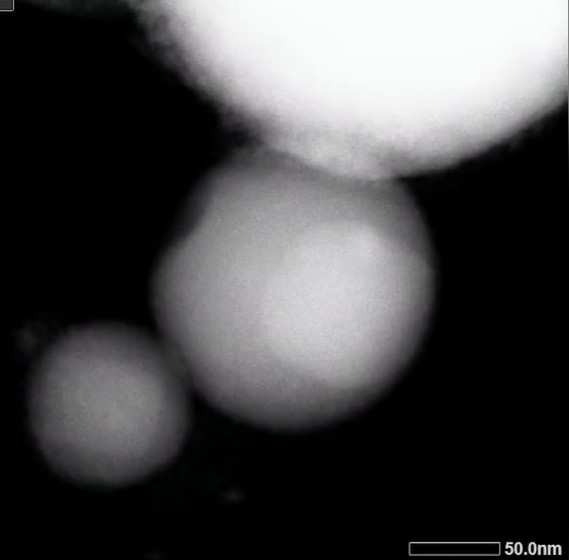
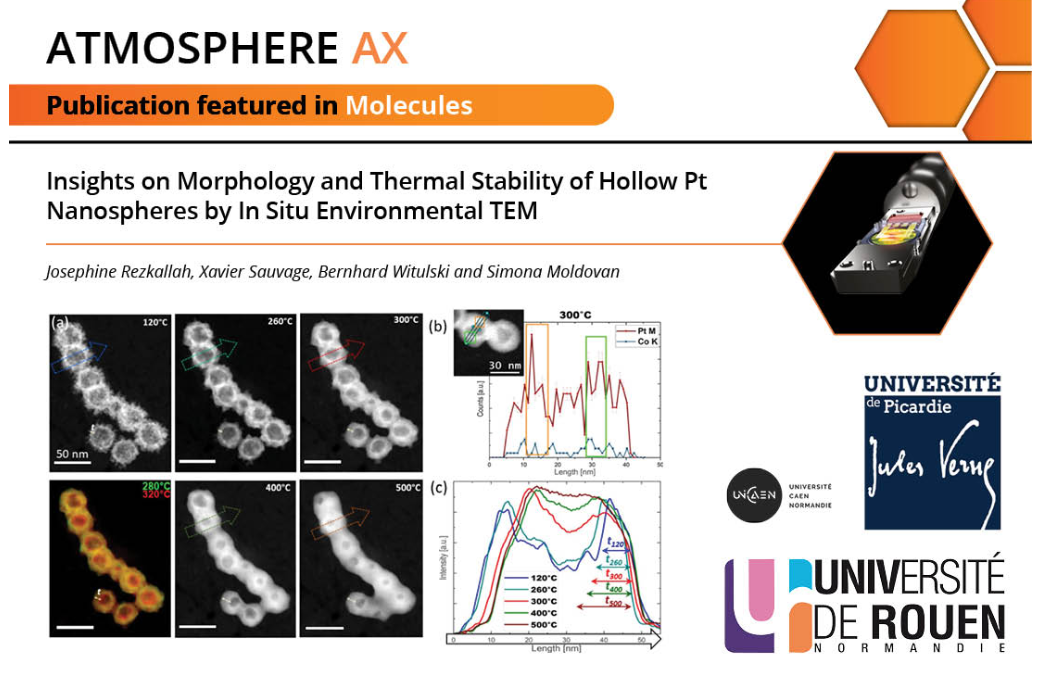
Insights on Morphology and Thermal Stability of Hollow Pt Nanospheres by In Situ Environmental TEM
Have you ever wanted to see how nanomaterials behave under extreme conditions? Josephine Rezkallah, Xavier Sauvage, Bernhard Witulski and Simona Moldovan from the #UniversiteeRouenNormandie used the #AtmosphereAX system to investigated the real-time thermal evolution of hollow Pt nanospheres (HNSs) in both vacuum and 1 bar in situ hydrogen environments.
What did the authors observe?
They captured dynamic structural changes of Pt HNSs under heating
Observed shell formation and eventual collapse at temperatures >500°C
Unraveled nanoparticle faceting, diffusion, and microstructural transformations
Provided 3D insights using electron tomography (ET) to map complex shell architectures
By visualizing nanomaterial behavior at atomic resolution, it is possible to get more insight into catalytic particle behavior, and therefore create more effective catalysts for future applications!
Want to read the entire paper?
|
|
|
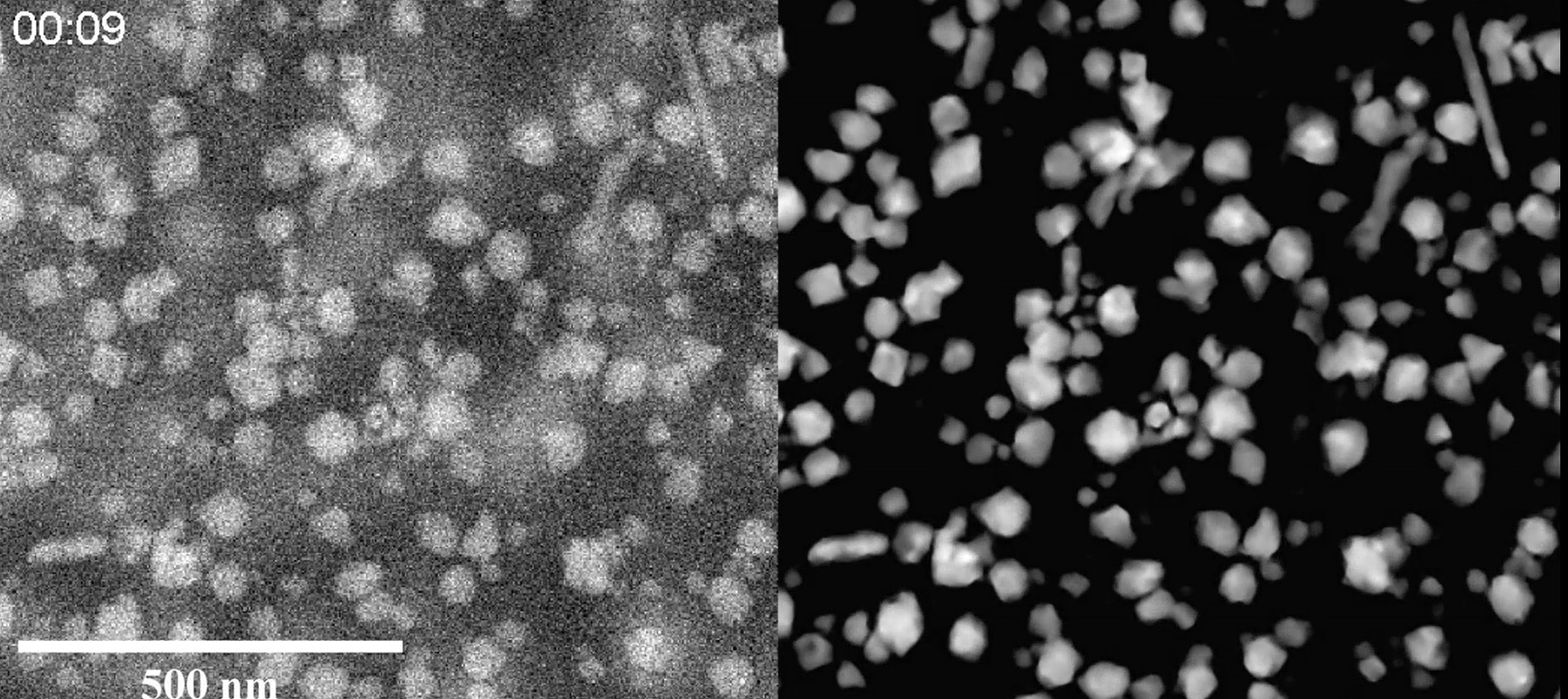
aquaDenoising: AI-enhancement of In Situ Liquid Phase STEM Video for Automated Quantification of Nanoparticles Growth
In this recent publication from the #UniversiteeParisCite, authors Adrien Moncomble, Damien Alloyeau, Maxime Moreaud, Abdelali Khelfa, Guillaume Wang, Nathaly Ortiz-Peña, Hakim Amara, Riccardo Gatti, Romain Moreau, Christian Ricolleau and Jaysen Nelayah looked developed aquaDenoising—a deep learning framework trained on kinematic model-based simulations to dramatically enhance STEM images and videos!
What did they find by using the aquaDenoising technique?
15x improvement in signal-to-noise ratio for gold NPs growing in water using the #PoseidonAX system.
Authors were able to do automated segmentation of NP assemblies and individual particles with expert-level precision and high-throughput analysis that surpasses manual methods in speed and accuracy.
This software is an open-source and is adaptable for various nanomaterials in liquid media.
By using AI-driven image processing with state-of-the-art liquid-phase EM, these processes can become automated, and can change liquid phase imaging to high-fidelity nanoscale imaging!
Want to read the entire work?
|
|
|
In this newest study, the #FusionAX system combined with environmental TEM (ETEM) enabled real-time visualization of plasma-driven phase transformations in Cu–Sn catalysts during silicon nanowire (SiNW) growth. The authors uncovered previously unobserved solid–liquid dynamics that govern nanoscale growth pathways under nonequilibrium conditions.
Key highlights:
🔬 ETEM captures plasma radical–driven phase transitions, revealing dynamic solid–liquid interactions within Cu–Sn catalysts
⚡ At 250 °C, H radicals induce a Cu₆Sn₅–Sn solid–liquid nanostructure, forming stable, nanoscale nucleation sites
🔥 At 400 °C, SiH₃ radicals trigger simultaneous SiNW nucleation and catalyst phase separation
🧪 A Sn-rich liquid phase supplies atomic steps, while a solid Cu₃Si phase remains epitaxially aligned—anchoring and stabilizing growth
🔄 Catalyst reorientation drives periodic reversal of step propagation, enabling the formation of ultrathin (~7 nm) SiNWs with alternating crystal phases
This work highlights how in situ plasma-enabled ETEM can reveal and control nonequilibrium growth mechanisms, opening new routes for engineering nanowires with tailored structures through dynamic catalyst design. |
|
|
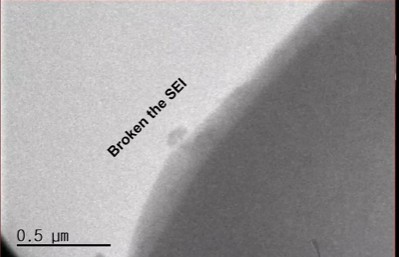
In this newest study, the #PoseidonAX system enabled in situ liquid TEM to directly visualize lithium deposition dynamics in anode-free lithium-metal batteries (AFLMBs). By combining nanoscale interface engineering with real-time imaging, the authors uncover how interfacial chemistry governs lithium growth and cycling stability.
Key highlights:
🔬 In situ liquid TEM reveals the formation of compact, dense lithium deposits, confirming uniform plating behavior at the nanoscale
⚡ An inorganic-rich interphase reduces charge-transfer resistance (Rct) at the Li/electrolyte interface, improving reaction kinetics
🧪 Poly(DOL) forms in situ via ring-opening polymerization, initiated by the Lewis acid nature of LixSn, enhancing interfacial stability and mechanical robustness
This work highlights how in situ electron microscopy can directly link interfacial chemistry to electrochemical performance, offering valuable design insights for stabilizing lithium metal and accelerating the development of practical anode-free batteries. |
|
|
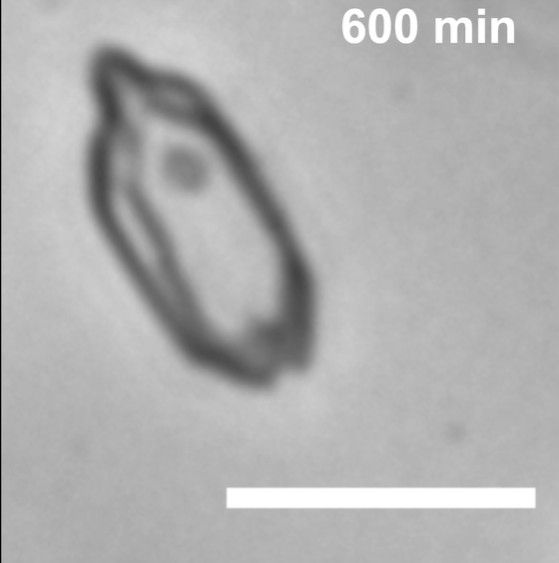
In this newest study, the #PoseidonAX system was used for operando liquid-cell electron microscopy to investigate how phosphate-based modifiers regulate calcium oxalate monohydrate (COM) mineralization. These processes are relevant for #Life-ScienceStudies to understand bone formation and pathological calcification. By mimicking posttranslational phosphorylated moieties, the authors uncover a powerful and unconventional inhibition mechanism.
Key highlights:
🧪 Polyphosphates and phosphonates suppress COM nucleation by altering prenucleation clusters
💎 Irreversible inhibition of crystal growth via lattice strain induced by retained phosphates
🔬 In situ electron microscopy reveal a ~6 h induction period with no measurable growth after exposure to modifiers
📈 Unlike the linear growth seen without modifiers, regrowth after inhibition is anisotropic and irregular
This work highlights the unique and efficient multi-modal role of phosphates in biomineralization, which were only seen using nanoscale type of studies such as in situ microscopy. |
|
|
In this newest study, the #PoseidonAX system was used for operando liquid cell EM to investigate the behavior of sulfur-doped high-entropy perovskite oxides during oxygen electrocatalysis. By combining nanoscale imaging with spectroscopic and theoretical analysis, the authors uncovered how multi-element active sites and oxygen vacancies regulate catalytic pathways for both the oxygen evolution and oxygen reduction reactions (#OER).
Key highlights:
🧪 Sulfur-doped La0.8Sr0.2(CrMnFeCoNi)O3 high-entropy perovskite oxides enable strong bifunctional activity for both OER and ORR
🔬 Operando liquid-cell TEM with the Poseidon AX reveals structural dynamics under electrochemical conditions
⚡ Multi-technique analysis and Density Functional Theory calculations uncover dual reaction pathways: the adsorbate evolution mechanism and the Lattice Oxygen Mechanism (LOM)
📈 Mn, Fe, Co, and Ni act as cooperative active sites for OER, while Mn, Fe, and Co primarily drive ORR activity, with oxygen vacancies promoting lattice oxygen participation
This work highlights how advanced operando nanoscale characterization, including liquid-phase TEM with the Poseidon AX, can reveal the complex catalytic mechanisms in high-entropy materials. |
|
|
In this newest study, the #AtmosphereAX system was used for in situ gas phase Transmission Electron Microscopy to visualize the real-time formation of a trimetallic nanoalloy catalyst for the alkaline oxygen evolution reaction. By tracking structural transformations during reduction under controlled gas environments, the authors reveal how layered precursors evolve into highly active face-centered cubic nanoalloy catalysts.
Key highlights:
🧪 Topological reduction of NiFeMo layered double hydroxide under an Ar/H₂ atmosphere forms a trimetallic fcc NiFeMo nanoalloy
🔥 In situ gas phase TEM captures the transformation from LDH nanosheets → inverse spinel Ni1-xMoxFe2O4 nanoparticles → spherical NiFeMo nanoalloy particles
📈 Theoretical calculations show Mo species reduce the energy barrier for *OH intermediate formation, enhancing the catalytic activity of Ni active sites
This work highlights how in situ gas-environment TEM can directly visualize alloy formation pathways and guide the design of next-generation trimetallic and high-entropy nanoalloy catalysts for energy conversion. |
|
|
Gas phase EM (GP-EM) with Atmosphere AX enables the visualization of dynamic processes at the nanoscale that help explain material behavior in their native gaseous environment including high temperatures and pressures. Whether you are observing chemical reactions in real-time, studying catalysts in action, or uncovering new materials science insights, GP-EM bridges the gap between traditional microscopy and the real world.
Latest publications
In a recent publication, the Atmosphere AX system was applied for in situ gas-phase electron microscopy to investigate heterogeneous catalysis under realistic reaction conditions. The study provides direct nanoscale insight into catalyst surface reconstruction during CO₂ hydrogenation.
The authors show that supported Ni₃InC₀.₅ nanoparticles undergo CO₂-induced surface oxidation, forming defective In₂O₃₋ₓ overlayers and inverse In₂O₃₋ₓ/Ni interfaces. This dynamic restructuring creates highly active catalytic sites that enhance CO₂ adsorption, activation, and subsequent hydrogenation steps, enabling efficient methanol synthesis.
As a result, the optimized catalyst demonstrates strong performance, achieving 19% CO₂ conversion and 65% methanol selectivity, outperforming conventional Cu/ZnO/Al₂O₃ systems. Overall, the work highlights the critical role of structural evolution under reaction conditions in improving catalytic activity and provides valuable insight into structure–activity relationships.
|
|
|
상담 문의
Email : hskim@lotiskorea.com
Tel : 010-2858-2798 |
|
|
|