Lotiskorea Newsletter 2026.06
|
|
|
Automated Grain Boundary Analysis
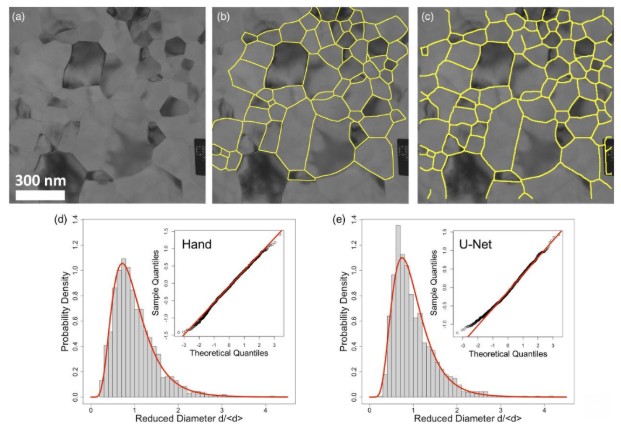
AI is also advancing the analysis of dynamic processes. A study published in Microscopy and Microanalysis (2025) combined Fusion AX with our AXON Synchronicity machine-vision software to show how machine learning can automate the tracking of grain boundary evolutions under high temperature and at the nano-scale.
Using machine learning to identify and follow interfaces across image sequences, the approach enables quantitative analysis of microstructural evolution with improved consistency, throughput, and scalability compared to manual workflows. Together, advanced in situ hardware and AI-driven analysis are enabling larger-scale studies of nanoscale materials dynamics while significantly reducing the manual effort traditionally required for data analysis.
Grain boundaries in a 100 nm thin Al film tracked by hand or by the U-net model.
Patrick, M.J. et al. (2023) Microscopy and Microanalysis, 0, 1–12 |
|
|
AI Enhanced Diffraction Analysis
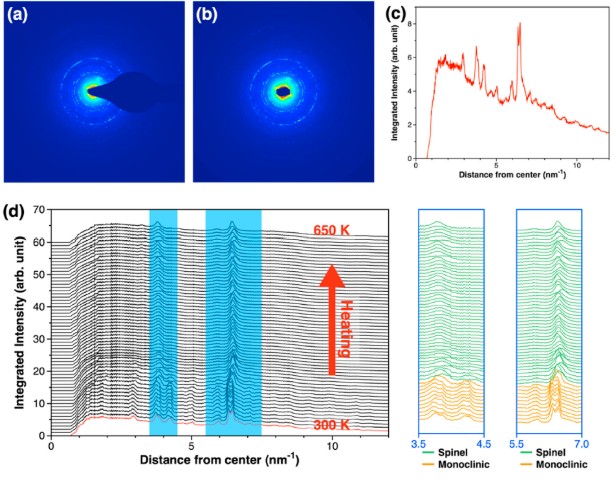
Additionally, machine learning is being applied to electron diffraction to analyse the diffraction patterns automatically (Figure 3). A recent study in Current Applied Physics (2024) highlights how AI can assist with diffraction pattern interpretation at high temperature using the Fusion AX system to heat the sample.
The software automatically analyzes large diffraction datasets to support tasks such as phase identification and structural classification. This is particularly valuable for in situ experiments, where diffraction patterns evolve rapidly and manual analysis can become a significant bottleneck.
Temperature induced phase transformation in FeOOH nanoparticles, analysed using electron diffraction, and automatically analysed with the Random Sample Consensus algorithm.
Lim, S. et al. (2024) Current Applied Physics, S156717392400110X
|
|
|
The developments in artificial intelligence for in situ microscopy reflect a broader shift toward integrated workflows in electron microscopy. Platforms such as AXON Synchronicity play a key role by enabling image enhancement, feature tracking, and analysis within a unified environment, supporting more efficient and quantitative in situ experimentation.
Learn more about AXON Synchronicity and AI in in situ microscopy below. |
|
|
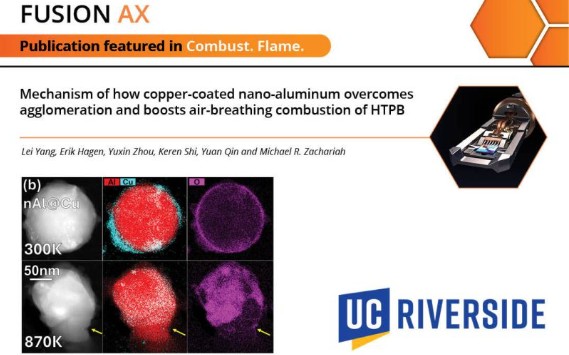
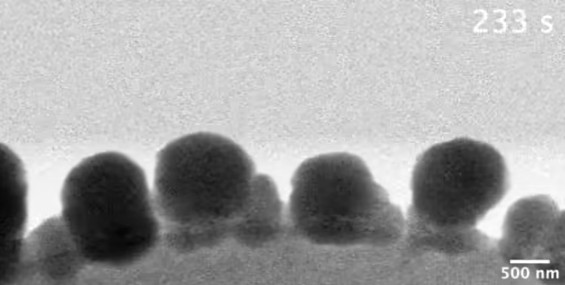
In this publication, the #FusionAX was used to investigate the combustion behavior in HTPB-based solid fuels. Aluminum nanoparticles that normally are being used in these systems tend to agglomerate at the burning surface, quenching further combustion. The authors combat this by investigating copper-coated aluminum nanoparticles at relevant combustion temperatures.
Key highlights:
🔬 The Fusion AX system enabled the visualization of nanoscale oxidation and shell fracture dynamics in Cu-coated aluminum nanoparticles
🔥 The copper coating promoted nanocracking of the alumina shell, enabling more rapid and complete aluminum oxidation
🚀 nAl@Cu/HTPB fuels achieved sustained continuous regression at particle loadings up to 10 wt% in air counterflow, outperforming neat HTPB
This work established a multiscale understanding of how nanoparticle surface engineering influences oxidation kinetics, fuel regression, and combustion stability. The findings provide valuable insight for the development of next-generation energetic materials and high-performance air-breathing propulsion systems.
Want to read the entire work? Find it here!
https://hubs.li/Q04hZJzF0
Want to know more about the Fusion AX system?
https://hubs.li/Q04hYPBx0 |
|
|
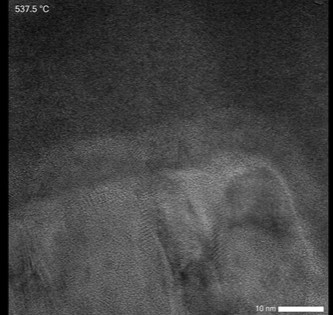
Interlayer stacking in strongly influence charge transport properties in 2D materials. Different stacking patterns (twist angles) in twisted-bilayer 2D materials can have unique impact on their electronic properties. Therefore, it is important to understand the atomic level origin of formation of Moiré superlattices in order to engineer them as per the desired device performance.
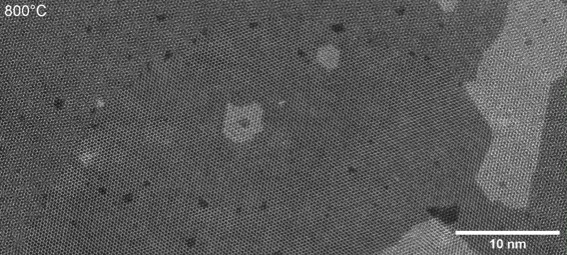
Researchers from University of Illinois Urbana-Champaign, Seoul National University and National Institute for Materials Science including Prof. Pinshane Huang investigated the thermally-induced structural evolution of twisted-bilayer transition metal dichalcogenides (TB-TMDCs) using in-situ aberration-corrected scanning transmission electron microscopy (STEM). Their investigations revealed that formation and dynamics of grain boundary defects along with the atomic dynamics result in nucleation of alignment of nanoscale bilayer domains within the Moiré supercell. The findings could help understand unanticipated properties of Moiré devices and offer routes to structure-direcred fabrication of twisted-bilayer 2D materials for optimal device performance.
In-situ STEM measurements were performed on a probe-corrected Thermo Fisher Scientific Themis Z microscope operated at 80 kV to mitigate the beam-induced knock-on damage. In-situ heating was performed using a Protochips Fusion heating and biasing holder. ADF images were acquired with probe convergence semi-angle of 25.2 mrad.
This atomic-resolution in-situ ADF time sequence demonstrates the nucleation and antiparallel alignment of a domain under in-situ heating.
Read the insightful findings published in the journal Science Advances.
https://lnkd.in/gKyhks5z |
|
|
In this publication, the #FusionAX system combined with #AXONSynchronicity enables correlated, time-resolved TEM analysis to unravel the atomic-scale origins of multilevel resistive switching in HfOx-based RRAM. By synchronizing structural and electronic insights, the authors reveal how crystallography and defect dynamics jointly define device performance.
Key highlights:
🔬 The Fusion AX was combined with AXON Synchronicity to drift correct any heat
🔥Reveals a “crystal phase–vacancy–electric field” tri-level mechanism governing resistive switching behavior
🔄 Thermally driven crystal rotation enables oxygen vacancy migration, driving transitions between resistance states
This work establishes a unified framework connecting atomic structure, defect physics, and device operation, highlighting how precise control of thermal and electrical conditions can enable reliable multilevel switching for next-generation computing-in-memory technologies.
Want to read the entire work? Find it here!
https://hubs.li/Q04cjTqC0
Want to know more about our Fusion AX system?
https://hubs.li/Q04cjTKn0 |
|
|
Using AI with In Situ Microscopy
In situ electron microscopy (EM) enables direct observation of dynamic material processes, but experiments are often limited by noise, beam sensitivity, and the challenge of analysing large, cumbersome datasets. The use of artificial intelligence (AI) is increasing to address these constraints by improving both data quality and analysis within the experimental workflow. So how does AI support an in situ microscopy workflow?
From Noisy Data to Clear Insight
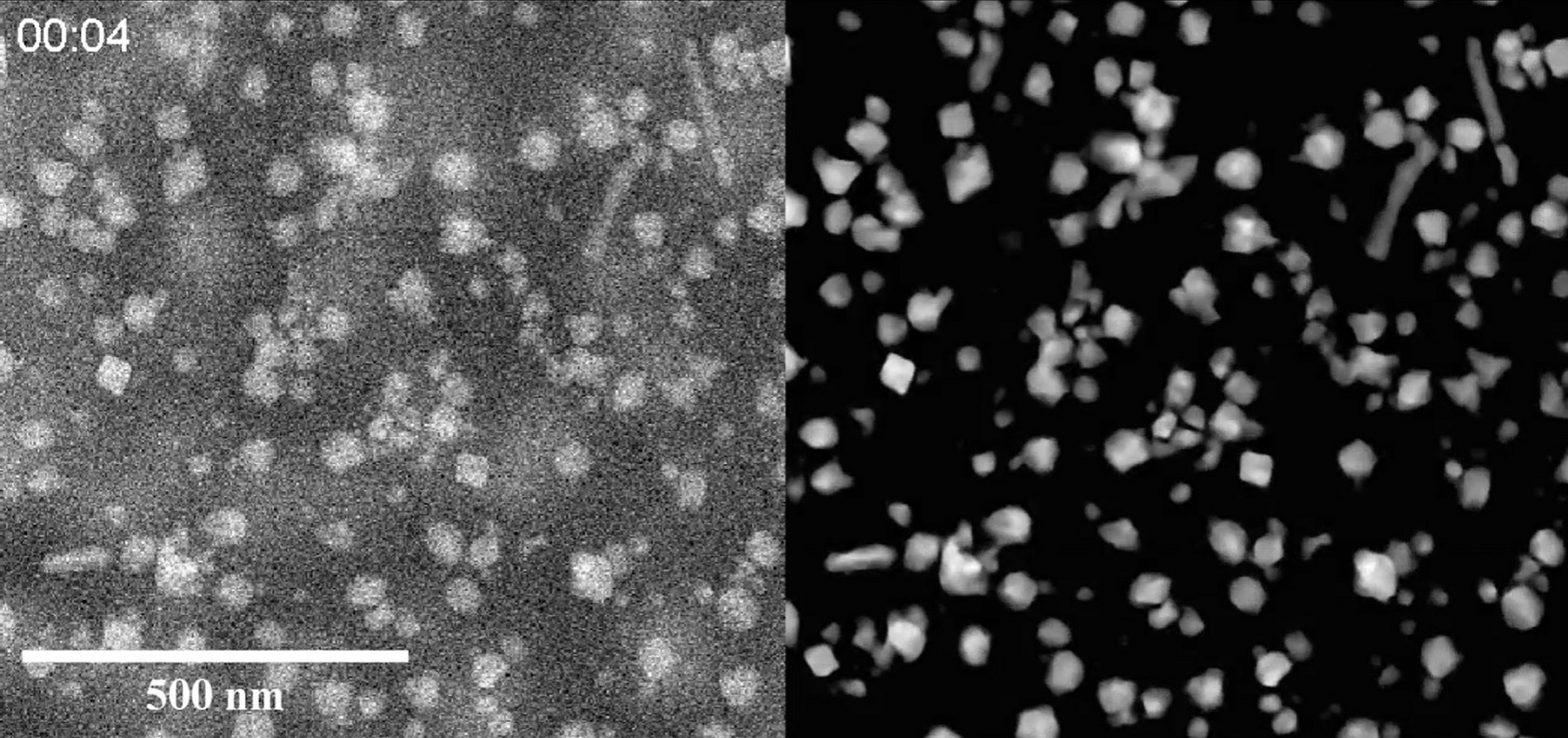
Recent work in Ultramicroscopy (2025) demonstrates an approach applied to liquid cell TEM data acquired with the Poseidon AX system. The study introduces aquaDenoising, a neural network framework capable of reconstructing high-quality LP-STEM images and videos from low-dose, noisy acquisitions while preserving nanoscale structural detail.
The method addresses a major challenge in in situ liquid phase electron microscopy: extracting reliable information during nanoparticle nucleation and growth despite strong signal degradation. In the study, AI-based denoising significantly improved image quality and enabled automated analysis with accuracy comparable to expert manual interpretation.
This is particularly valuable for beam-sensitive systems, where increasing electron dose is often not feasible due to radiolysis side reactions. In these cases, AI enables meaningful interpretation of dynamic in situ data that would otherwise be difficult to analyze.
Using different ‘aquadenoising’ techniques on gold nanoparticles in a liquid cell results in clear images.
|
|
|
In this published work by the group at Yang Group at Cornell, the #TritonAX was used to benchmark our standard reference electrode (RE) solution using a metal Luggin-Haber bridge. The authors perform a rigorous study using different pH values to observe the effects using both Pt (pseudo)-RE from the E-chip and the Ag/AgCl RE, bridged from the holder.
Key highlights:
🔬 A metal-bridge strategy connects an on-chip Pt pseudo-reference electrode to an external Ag/AgCl reference, enabling reliable real-time potential calibration
⚡ Electrochemical benchmarking confirms accurate potential control and Nernstian hydrogen kinetics on Pt across a wide pH range (1–12)
💧 Operando STEM captures Cu nucleation and growth dynamics, showing faster deposition at higher overpotentials
🔋 Cu²⁺ depletion is identified as the key driver for the transition from mossy to dendritic growth—effectively suppressed by introducing electrolyte flow
This work highlights how advanced operando electrochemical TEM approaches can deliver both structural and electrochemical accuracy, providing critical insights to control dendrite formation in energy storage and other electrochemical systems.
Want to read the entire work? Find it here!
https://hubs.li/Q04cjd200
Want to know more about the Triton AX system with the standard RE?
https://hubs.li/Q04cjYt40 |
|
|
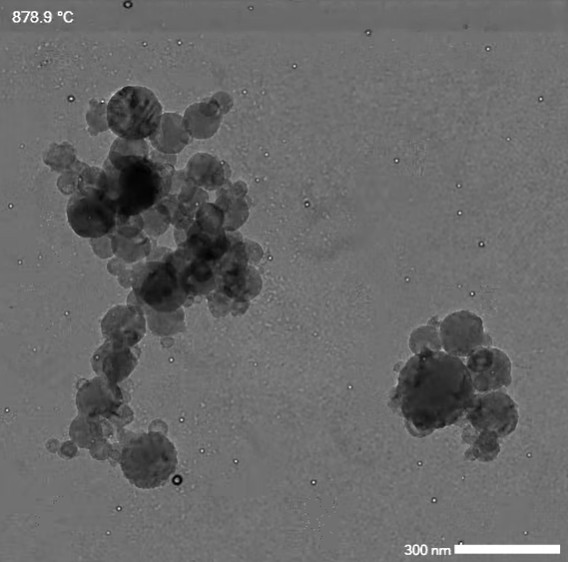
In this publication, authors used the #AtmosphereAX to investigate the oxidation kinetics of aluminum nanoparticles from 25 to 1000 °C. The study reveals how diffusion-controlled oxidation mechanisms drive nanoscale structural transformations.
Key highlights:
🔬 The Atmosphere AX system enabled real-time visualization of nanoparticle oxidation dynamics under reactive gas environments. This revealed a three-stage oxidation pathway from room temperature to 1000 °C with distinct temperature-dependent reaction mechanisms
💠 Low-temperature oxidation (∼600–800 °C) is governed by oxygen diffusion through the alumina shell, resulting in irregular particle expansion
🔥 High-temperature oxidation (∼800–1000 °C) is dominated by outward Al diffusion through the alumina shell, ultimately producing hollow particles
📈 Quantitative temporal imaging enabled extraction of reaction flux and diffusivity, revealing a strong dependence of measured diffusivity on heating rate and helping explain disparities reported throughout the literature
This work highlights nanoscale oxidation behavior by directly connecting thermal conditions, diffusion kinetics, and particle morphology evolution. These findings provide valuable insight for energetic materials research, oxidation modeling, and the development of thermally robust nanomaterials.
Want to read the entire work? Find it here!
https://hubs.li/Q04hSVxh0
Want to know more about the Atmosphere AX system?
https://hubs.li/Q04hS_C30 |
|
|
상담 문의
Email : hskim@lotiskorea.com
Tel : 010-2858-2798 |
|
|
|