Lotiskorea Newsletter 2026.07
|
|
|
Biomineralization of semiconductor quantum dots using DNA-functionalized protein nanoreactors
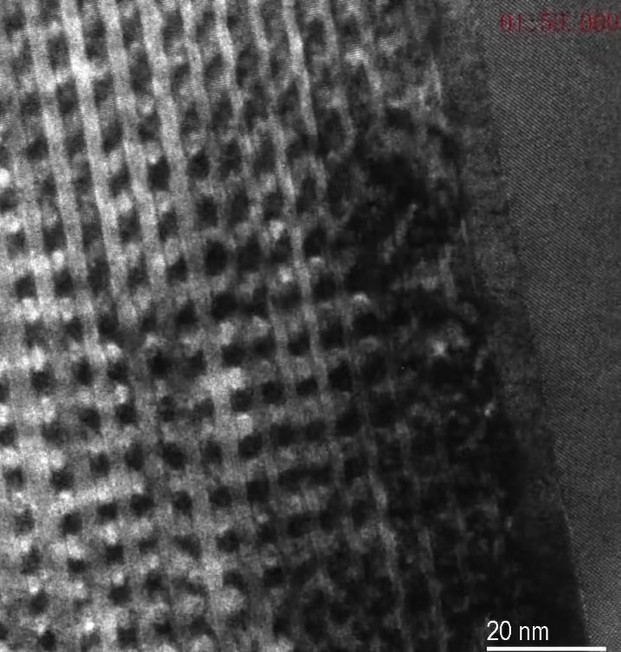
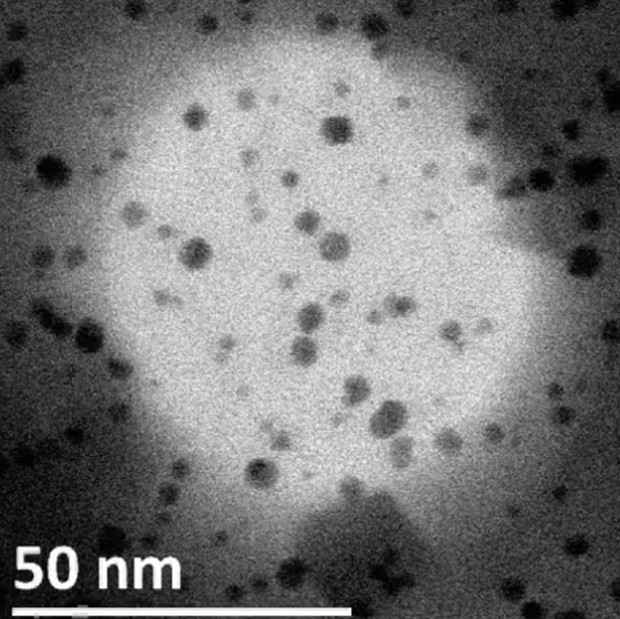
Researchers at Northwestern University recently used AXON Synchronicity software to capture HRSTEM images of CdS semiconductor quantum dots. Thanks to built-in drift correction, the images stayed super stable throughout acquisition — no more battling with sample instability or losing resolution over time.
Thereafter, utilizing the free AXON Studio software, the team applied a three-frame rolling average during post-processing. Why does this matter?
It reduces random noise without blurring fine atomic detail
It enhances signal-to-noise ratio for even cleaner imaging
It’s like giving your microscope a clarity boost — letting true structure shine through
AXON isn’t just software — it’s a smarter way to unlock the full potential of your electron microscope!
Want to read the entire paper? Find it here!
https://www.science.org/doi/10.1126/sciadv.adv6906 |
|
|
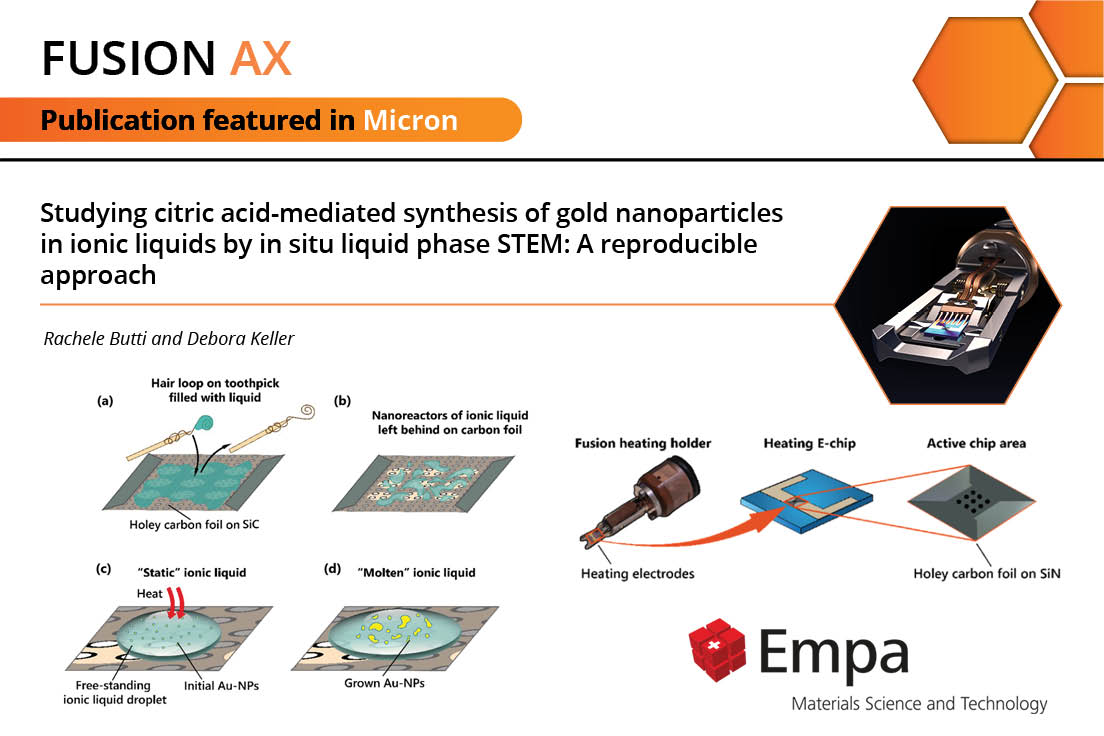
Studying citric acid-mediated synthesis of gold nanoparticles in ionic liquids by in situ liquid phase STEM: A reproducible approach
In this newest publication from Debora Keller and Rachele Butti, at Empa-Swiss Federal Laboratories for Materials Science and Technology, the authors report a reproducible method to study ionic liquids using the Fusion AX system!
Using the heating options of the Fusion system it was possible to image the nucleation and growth of gold nanoparticles in real time, inside ionic liquid environments that act as solvent, stabilizer, and reaction medium all at once.
Dynamic rearrangement, surface diffusion, and coalescence seen in the ionic liquid
Real-time tracking of nucleation and growth pathways under controlled heating
This paper highlights that the Fusion AX system can be used not only for heating solids, but also for heating #ionicliquids safely! Furthermore, it shows that the ionic liquids are a unique starting material in nanomaterial synthesis pathways.
Want to read the entire paper? Find it here!
https://linkinghub.elsevier.com/retrieve/pii/S0968432825000976 |
|
|
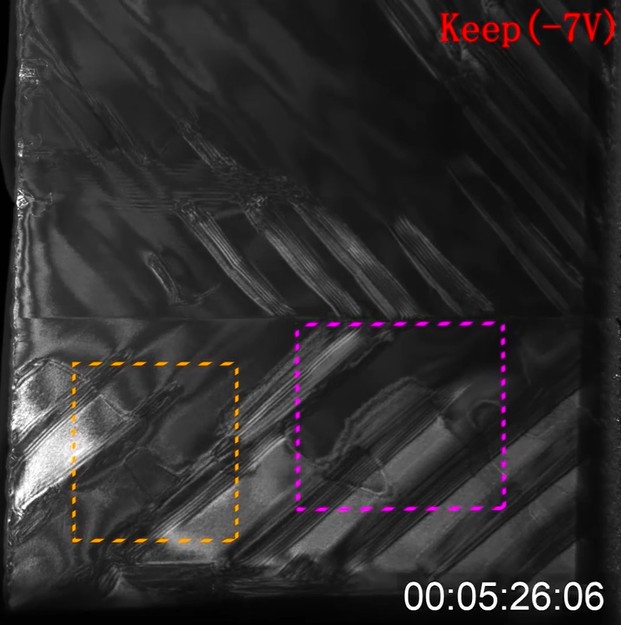
In this publication, the #FusionAX system enabled in situ TEM the investigation of ferroelectric domain switching dynamics in a relaxor ferroelectric PMN-PT single crystal under applied electric fields. By combining electrical biasing inside the TEM with quantitative domain analysis, the authors directly correlated nanoscale polarization reversal processes with macroscopic ferroelectric behavior.
Key highlights:
⚡ Fusion AX enabled in situ TEM observation of ferroelectric domain nucleation, growth, and evolution during electrical cycling
📊 Quantitative analysis of domain-area evolution allowed extraction of microscopic polarization reversal velocities and their relationship to macroscopic P–E hysteresis behavior
🔍 The study provides direct visualization of domain switching mechanisms when electric fields are applied non-parallel to the polarization direction, offering new insights into relaxor ferroelectric behavior
This work delivers a comprehensive nanoscale understanding of ferroelectric polarization reversal in PMN-PT single crystals. By linking real-time domain evolution to bulk electrical responses, the study advances our understanding of domain switching kinetics and provides valuable guidance for the development of next-generation piezoelectric and ferroelectric devices.
Want to read the entire work? Find it here!
https://hubs.li/Q04mh6m10
Want to know more about our Fusion AX system?
https://hubs.li/Q04mh50T0 |
|
|
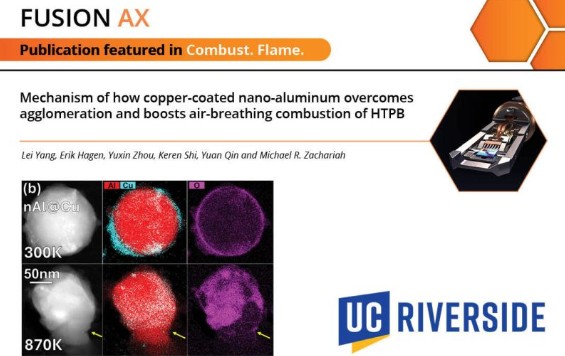
In this publication, the #FusionAX was used to investigate the combustion behavior in HTPB-based solid fuels. Aluminum nanoparticles that normally are being used in these systems tend to agglomerate at the burning surface, quenching further combustion. The authors combat this by investigating copper-coated aluminum nanoparticles at relevant combustion temperatures.
Key highlights:
🔬 The Fusion AX system enabled the visualization of nanoscale oxidation and shell fracture dynamics in Cu-coated aluminum nanoparticles
🔥 The copper coating promoted nanocracking of the alumina shell, enabling more rapid and complete aluminum oxidation
🚀 nAl@Cu/HTPB fuels achieved sustained continuous regression at particle loadings up to 10 wt% in air counterflow, outperforming neat HTPB
This work established a multiscale understanding of how nanoparticle surface engineering influences oxidation kinetics, fuel regression, and combustion stability. The findings provide valuable insight for the development of next-generation energetic materials and high-performance air-breathing propulsion systems.
Want to read the entire work? Find it here!
https://hubs.li/Q04hZJzF0
Want to know more about the Fusion AX system?
https://hubs.li/Q04hYPBx0 |
|
|
Topological structures and associated phase transitions have gained huge attention nowadays due to their potential applications in electronic devices. Particularly, vortex-antivortex (V-AV) pairs are of a great significance as they dictate the properties of superconductors, superfluids and many exotic characteristics. As supported by numerous theoretical studies, V-AV pairs are expected to exhibit various dynamical behaviors including motion, self-annihilation, etc. However, experimental investigation is limited by the capabilities of current characterization techniques.
For example, Lorentz TEM (LTEM) is typically used for studying magnetic topologies. However, as we turn off the objective lens and as LTEM typically involves defocus, phase contrast is highly sensitive to the imaging conditions. For example, quasi-2D magnetic materials exhibit only weak magnetism and LTEM needs a large defocus to generate a meaningful data which results in the loss of spatial resolution.
Now, researchers from Peking University, 浙江大学, 华东师范大学, 湖南科技大学 and 南方科技大学 employed in-situ (S)TEM combined with phase field simulations to investigate dynamics of V-AV pairs in PbTiO₃/SrTiO₃ (PTO/STO) quasi-2D superlattice structure at atomic scale. Their study revealed that polar vortices and antivortices can stably coexist as bound pairs at room temperature however heating results in the loss of polarization. Furthermore, application of external electric field drives the approach of V-AV cores leading to self-annihilation close to the interface.
In-situ (S)TEM experiments were performed on a probe-corrected Thermo Fisher Scientific Titan Themis G2 microscope operated at 300 kV. In-situ heating and application of external electric field was performed using a Protochips Fusion AX in-situ heating and biasing holder. STEM imaging conditions involved a convergence semi-angle of 30 mrad and collection semi-angles of 50-200 mrad (HAADF) and 39-200 mrad (MAADF).
This TEM dark-field image series demonstrates the reversible transformation of polar V-AV pairs under externally applied electric fields in (PTO)₁₁/(STO)₆ quasi-2D superlattice structure. The dark-field image series was acquired under the 2-beam condition with g = (002).
Read the interesting findings published in the journal Advanced Materials.
https://lnkd.in/dpDz4nHr |
|
|
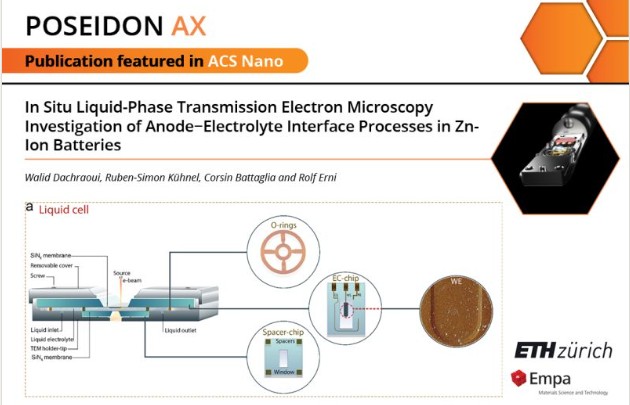
In this newest publication from Walid Dachraoui, Ruben Kühnel, Corsin Battaglia and Rolf Erni, the #PoseidonAX 💧 system was used to investigate the nucleation and growth mechanisms of zinc dendrites in aqueous zinc #batteries (AZBs). By directly observing Zn deposition dynamics in liquid environments, the authors reveal how early-stage crystallographic evolution governs the formation of hazardous dendritic structures.
Key highlights:
🔬 The Poseidon AX system enabled real-time EC-LC-STEM visualization of Zn dendrite evolution during electrochemical cycling
⚡ Reveals a multistep dendrite growth pathway beginning with localized nucleation of hexagonal Zn species at the electrode–electrolyte interface
🔋 Findings provide new insight into the mechanisms driving unsafe Zn growth in aqueous zinc-ion battery systems
This work establishes a deeper understanding of zinc dendrite formation by connecting early nucleation behavior with large-scale dendritic evolution. The findings offer valuable guidance for developing safer and more stable aqueous and hybrid zinc battery technologies.
Want to read the entire work? Find it here!
https://hubs.li/Q04lyGwg0
Want to know more about our Poseidon AX system?
https://hubs.li/Q04ly9B70
|
|
|
In this newest work published by #CornellUniversity in collaboration with #Protochips, Sungin Kim under the supervision of Prof. Yao Yang has published the first paper using the #TritonAX system!
By combining electrochemical control, heating, and cooling in liquid environments, researchers show a completely new way to explore nanoscale processes across a wide temperature range (−50 °C to 300 °C).
With Triton AX, the team was able to:
⚡ Perform quantitative electrochemistry under realistic, extreme conditions
🔥❄️Directly visualize Cu electrodeposition and stripping from cold to hot environments
🔬Apply machine learning–assisted 4D-STEM analysis to reveal how nanoscale copper islands evolve into dendrites
Understanding electrochemistry in action — at the atomic scale and under operando conditions — is critical for advancing renewable energy materials like catalysts and batteries that must perform in diverse climates.
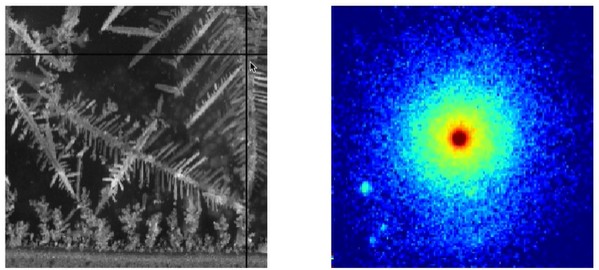
In the video we can see the results of operando 4D-STEM diffraction imaging in liquids at −40 °C on the Cu dendrites that were formed.
Want to read the entire work? Find it here!
https://hubs.li/Q04hCLZW0 |
|
|
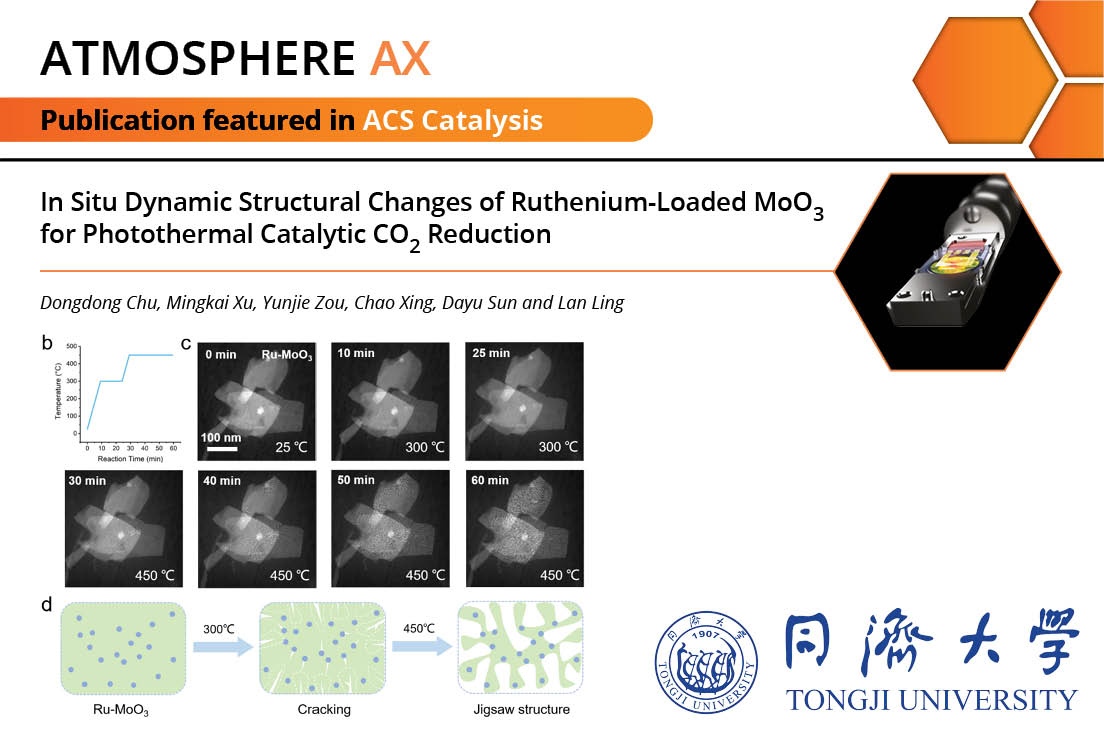
In Situ Dynamic Structural Changes of Ruthenium-Loaded MoO3 for Photothermal Catalytic CO2 Reduction
Hydrogen spillover is a cornerstone phenomenon in heterogeneous catalysis, but its full impact on catalyst supports has remained unclear. Using Atmosphere AX in situ STEM, authors from the Tongji University directly observed how active hydrogen species reshape catalyst supports during the reversed water–gas shift (RWGS) reaction.
What did they find?
Active hydrogen accelerated lattice oxygen evolution in MoO₃
Ru–MoO₃ nanosheets transformed into a porous, jigsaw-like structure
Enhanced formation of active CO₂ sites drove 14.3% CO₂ conversion with nearly 100% CO selectivity at 300 °C—approaching thermodynamic limits
By directly visualizing the dynamic support reconstruction process, the authors uncovered how hydrogen spillover shapes both morphology and catalytic performance.
Want to read the entire paper? Find it here!
https://pubs.acs.org/doi/10.1021/acscatal.5c02307 |
|
|
In this publication, the #AtmosphereAX system enabled operando TEM analysis of platinum nanoparticles supported on natural diatomite bio-silica during catalytic CO oxidation. The group of Ovidiu ERSEN, with Othmane Darouich , Dris Ihiawakrim, Sana Labidi and Walid Baaziz combined reactive gas microscopy, residual gas analysis (#RGA), and in situ electron #tomography. With these techniques, the authors directly correlate catalyst structure, gas evolution, and thermal stability across a wide temperature range.
Key highlights:
🔬 Atmosphere AX enabled operando TEM imaging of Pt nanoparticle evolution under reactive CO oxidation environments
📈 The integrated RGA system was used to analyze the gas stream in real time, revealing catalytic activity and reaction kinetics from room temperature up to 400 °C
🧩 In situ electron tomography performed before and after reaction enabled direct 3D comparison of Pt nanoparticle positions and silica porosity
This work provides direct nanoscale insight into how natural Fe/Al-rich interfacial layers govern catalyst anchoring, thermal stability, and deactivation pathways under harsh oxidation conditions. The findings demonstrate the power of combining operando TEM, gas analysis, and 3D tomography to understand catalyst behavior in realistic environments.
Want to read the entire work? Find it here!
https://hubs.li/Q04lxmqT0
Want to know more about our Atmosphere AX system?
https://hubs.li/Q04lxtgv0 |
|
|
🔥How much heat does your light source generate during an in situ TEM experiment?
When light interacts with a small amount of material, it generates heat, but how much? What temperature is your sample truly experiencing when illuminated? And are the changes you observe driven by optical excitation, photothermal effects, or a combination of both? Understanding photothermal effects is one of the biggest challenges in light-driven TEM studies.
Sol for Atmosphere AX is the only commercially available system that quantitatively measures photothermal effects during illumination, giving researchers confidence in their experimental interpretation.
Choose from two operating modes:
☀️ Constant Temperature Mode Maintain a fixed sample temperature while varying light intensity, ensuring you will maintain the proper reaction temperature.
🌡️ Photothermal Mode
Allow the sample temperature to respond naturally to changes in light intensity and directly measure the temperature increase (ΔT) generated by photoillumination.
With Sol for Atmosphere AX, you can finally separate thermal and optical effects while generating a relevant environment within the TEM.
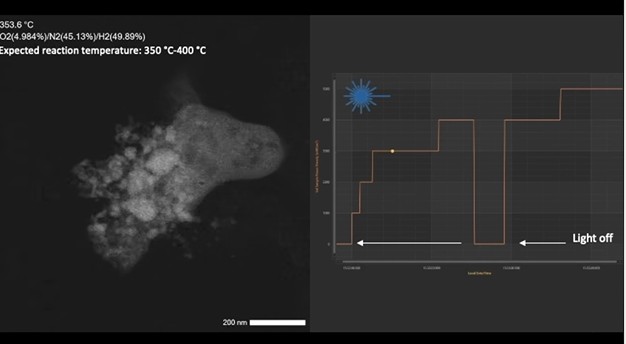
📺 In the video below, the heat generated by the increasing power density pushes the sample temperature up to the reaction temperature. The dynamics observed would occur even without light at these temperatures. Don't mistake your thermally-driven reaction for light-driven!
Learn more about Sol for Atmosphere AX here: https://hubs.li/Q04m3tk10 |
|
|
상담 문의
Email : hskim@lotiskorea.com
Tel : 010-2858-2798 |
|
|
|